The Art of the Analog Workspace: Why Tactile Planning Works
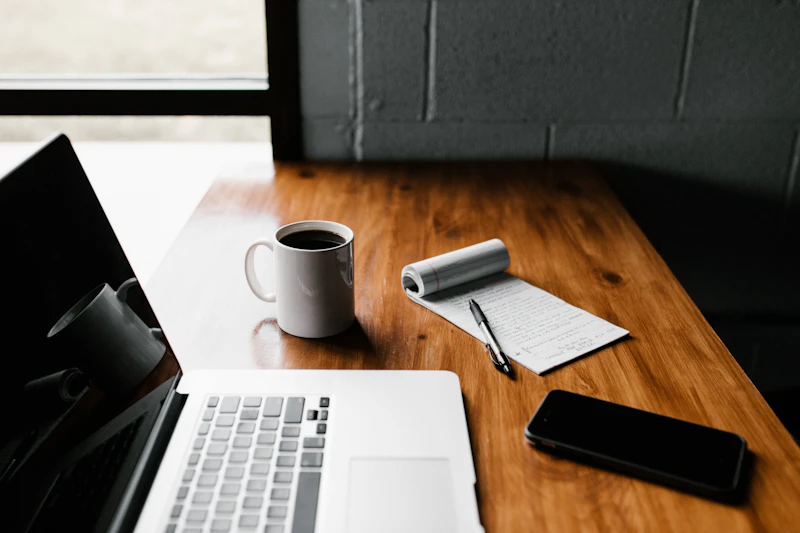
In an age defined by constant notifications, flickering screens, and the relentless hum of digital connectivity, many professionals find themselves feeling more distracted than ever. We have traded physical notebooks for complex task management apps and whiteboards for cloud-based collaboration tools. While these advancements offer speed and synchronization, they often sacrifice the cognitive depth required for truly meaningful work. Exploring the Art Analog Workspace reveals why returning to paper, ink, and physical space can be the key to reclaiming focus and clarity.
The Cognitive Benefits of Physical Writing
There is a fundamental difference between typing on a keyboard and moving a pen across a page. When we write by hand, we engage our brains in a process known as encoding. Studies suggest that the act of forming letters and physically mapping ideas on paper forces the brain to process information more deeply than the passive act of typing.
Improving memory retention through tactile movement
When you type, your fingers often move on autopilot. The tactile sensation of writing, however, requires a high level of motor coordination that activates specific regions of the brain associated with memory and learning. This is why students who take handwritten notes often outperform those who type them; they are forced to synthesize information in real-time rather than simply transcribing it.
Reducing the friction of digital distraction
A digital device is a gateway to everything. When you open a laptop to plan your day, you are one click away from email, social media, and breaking news. A notebook, by contrast, is a singular tool. It does not ping, buzz, or demand your attention. By removing the digital interface, you remove the temptation to multitask, allowing for a state of deep work that is increasingly rare in the modern office.
Designing a Workspace That Encourages Deep Thought
Your physical environment acts as a mirror for your mental state. If your desk is cluttered with cables and glowing screens, your mind is likely to mirror that fragmentation. By incorporating analog tools into your workflow, you create a sanctuary for concentrated effort.
The role of physical artifacts in task management
There is something uniquely satisfying about checking off a task on a physical list. It provides a tangible record of accomplishment that a digital checkmark simply cannot replicate. Using a physical planner or a series of index cards allows you to visualize your workload in a way that is not constrained by a screen size or a software update.
Creating boundaries between work and technology
The Art Analog Workspace is not about rejecting technology entirely, but about using it intentionally. You might use a digital calendar for scheduling appointments, but use a paper notebook for drafting strategy or brainstorming creative solutions. This separation creates a healthy boundary, signaling to your brain when it is time to consume information and when it is time to create it.
Why Tactile Planning Is More Than Just Nostalgia
Some critics argue that analog planning is a step backward, a romanticized habit that ignores the efficiency of modern software. However, efficiency is not the same as effectiveness. If you are efficient at doing the wrong things, or if your digital tools are causing you to lose focus, you are not actually making progress.
The importance of spatial awareness in planning
Digital lists are often linear, hiding items behind menus or collapsing them into sub-folders. A physical workspace allows you to see the big picture. Spreading out documents, sticky notes, or a large calendar on a desk gives you a spatial understanding of your goals. You can see how projects relate to one another, making it easier to prioritize tasks based on context rather than just a digital deadline.
Developing a personalized workflow
One of the greatest drawbacks of digital productivity apps is their rigidity. You are forced to adapt your brain to the software’s logic. With a blank notebook, you are the architect. You can draw diagrams, use mind maps, or create complex scheduling grids that suit your specific way of thinking. This autonomy is a cornerstone of the Art Analog Workspace, empowering you to build a system that works for you, not against you.
Practical Steps to Transitioning Your Workflow
You do not need to throw away your computer to start benefiting from analog planning. In fact, a hybrid approach is often the most sustainable path for the modern professional. The goal is to identify which tasks require deep concentration and move those into your analog space.
Starting with a daily analog ritual
Begin each morning by closing your laptop for the first twenty minutes of your workday. Use this time to write out your top three priorities for the day in a physical notebook. By setting your intentions on paper before you enter the digital fray, you create an anchor for your day. Even when the emails start pouring in, you have a physical reminder of what actually matters.
Curating your analog toolkit
The Art Analog Workspace thrives on quality tools that you enjoy using. Invest in a pen that feels comfortable in your hand and a notebook with paper that doesn’t bleed. When you enjoy the tactile experience, you are more likely to stick with the habit. Avoid over-complicating it with expensive planners; the simpler the tool, the less friction there is between your thoughts and the page.
Embracing the Slow Productivity Movement
We live in a culture that equates speed with value. We feel compelled to respond to messages instantly and complete tasks as quickly as possible. Yet, the most significant contributions to any field rarely come from those who respond the fastest. They come from those who are willing to slow down, reflect, and engage in the messy, human process of thinking.
Analog planning provides the necessary friction to slow down. It forces you to pause, organize your thoughts, and prioritize your actions. It transforms planning from a administrative chore into a meditative practice. By choosing to work this way, you are not just getting more done; you are improving the quality of your output and protecting your mental bandwidth.
Conclusion
The shift toward digital-only workflows has led to a sense of burnout and a loss of cognitive focus for many. While technology has its place, the Art Analog Workspace offers a powerful alternative for those seeking to regain control of their attention. By embracing the tactile nature of pen and paper, you can foster deeper memory retention, reduce digital distractions, and design a workflow that genuinely supports your goals.
You do not need to abandon your digital tools to see the benefits. Instead, treat your analog space as a vital partner to your digital one. Use the computer for storage and communication, but use your hands and your notebook for the heavy lifting of thinking and planning. In a world that is moving faster every day, the ability to slow down and map out your path by hand is not just a productivity hack; it is a competitive advantage.